

What is a TPRV (Temporary Pressure Relief Valve) and Why They’re Important
Water heater TPR valve releases excessive tank pressure if for any reason it reaches an unsafe level, that's why all tank type units MUST HAVE a pressure relief valve installed

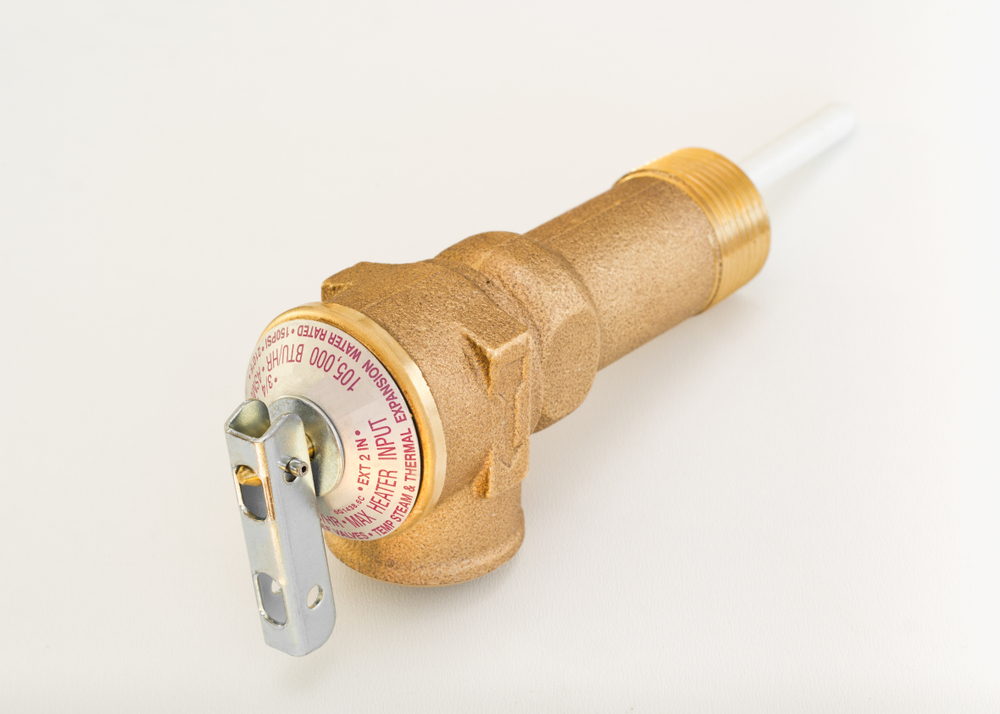
Water heater TPR valves must be installed on every water heater (gas or electric).
TPRV – Temporary Pressure Relief Valve. Water heater TPR valve is also known as Watts Temperature and Pressure Relief Valve. The pressure relief valve is usually located on top or side wall of the tank enclosure (tankless water heater safety valve, also known as T&P valve is located underneath the appliance).
Some old water heater tanks (1960s or earlier – they are still operating in some houses), were not equipped with pressure relief valves, and I would highly recommend replacement for safety and financial reasons (sediment at the base of old tanks is so thick, that it takes much more gas to heat up the same amount of water).
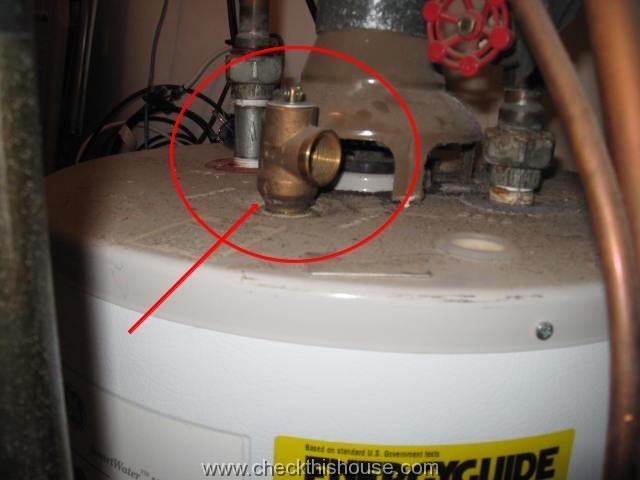 Water heater TPR valve releases excessive tank pressure if for any reason it reaches an unsafe level, that’s why all tank type units MUST HAVE a pressure relief valve installed, otherwise they could simply blow up. Because some of us are very creative, and you might own a property purchased from such a person, below are the major no-no’s.
If something listed below appears to be similar to the installation in your home – FIX it immediately!
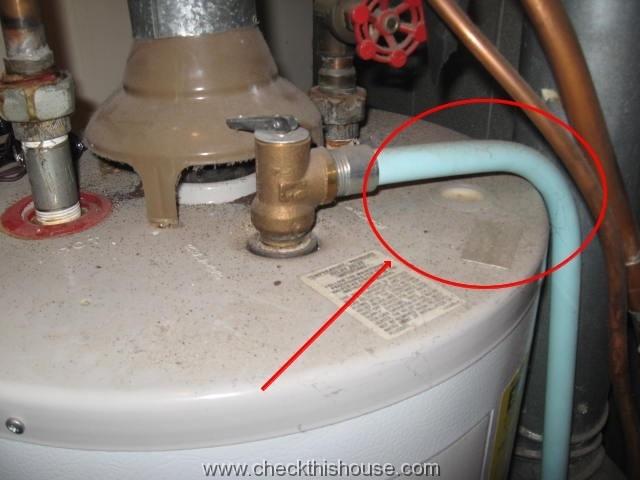
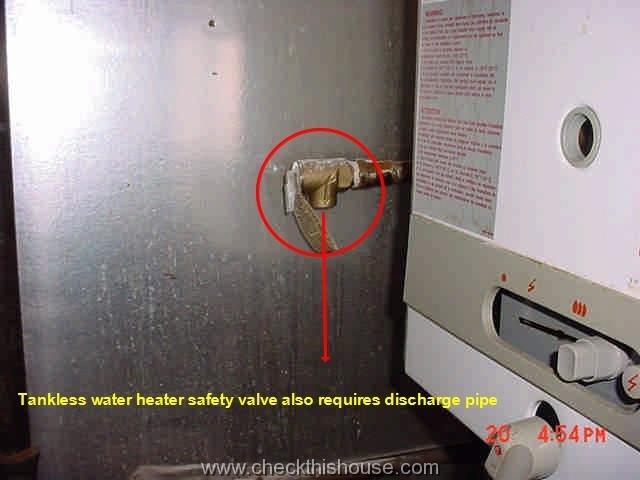 Water heater TPR valve must have a discharge pipe attached to it (blue tubing on this picture is just one of the few permitted types of pipes). Discharge pipe should extend from the water heater TPR valve and terminate within 6″ from the floor surface (distance and discharge location might slightly vary between some jurisdictions, so check with your local code enforcement division, or local / licensed plumber).
Such installation is required so if the valve needs to relief pressure / hot water, it will be discharged at the floor level, and not sprayed at your face or / and body.
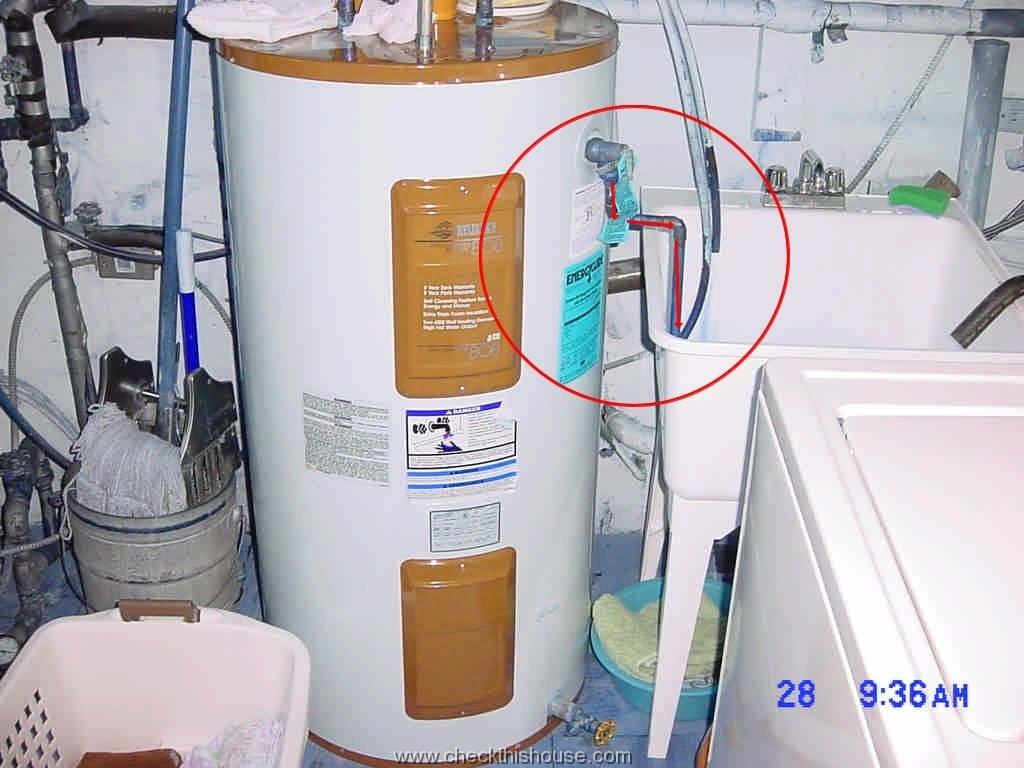
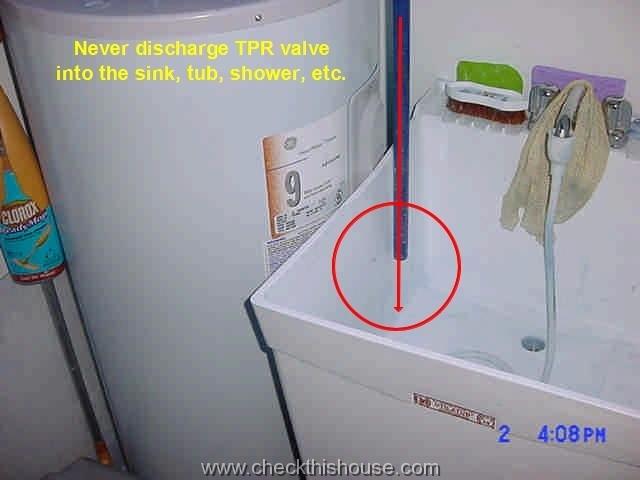
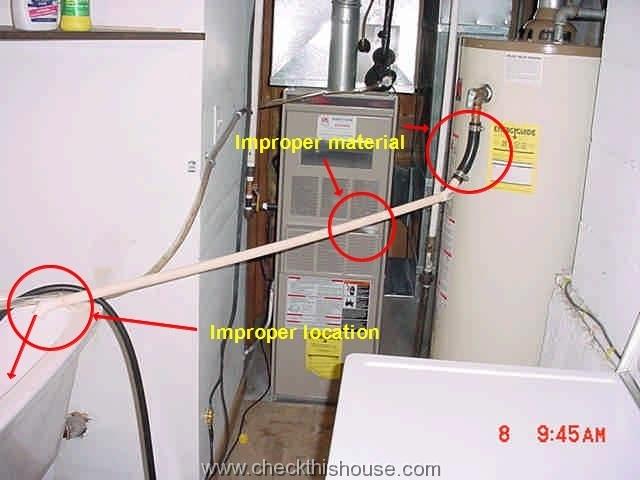 Water heater TPR valve should never discharge into the sink, tub, shower stall, etc. Emergency discharge of hot water / steam might cause severe injury. Keep the discharge pipe low, always pointing down and within 6″ from the floor level – you may also pipe it directly into the floor drain.
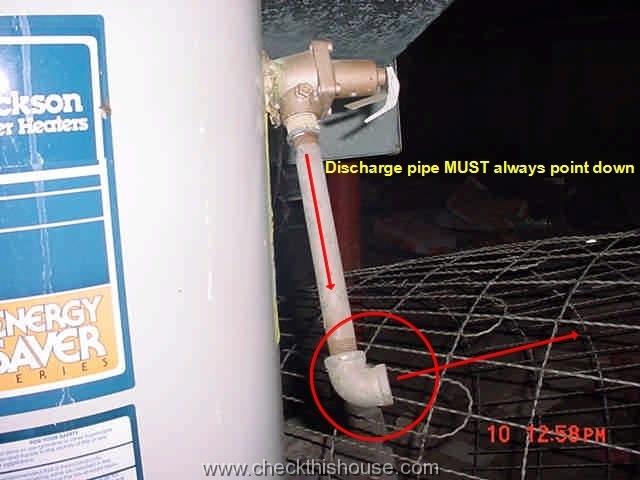

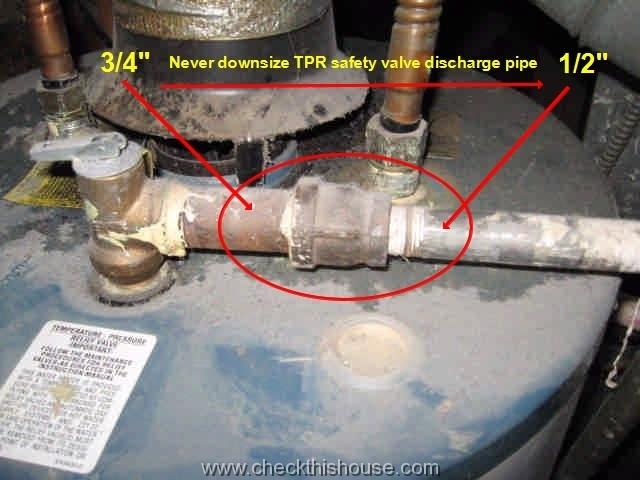 Water heater TPR valve discharge pipe must be the same size as the valve’s discharge end, which is 3/4″ in diameter. The reason is simple – it has to be able to relief the same amount of water as the amount coming through the inlet side of the water heater, no reductions should be made or any type of valves installed between the safety relief valve valve and discharge pipe end.
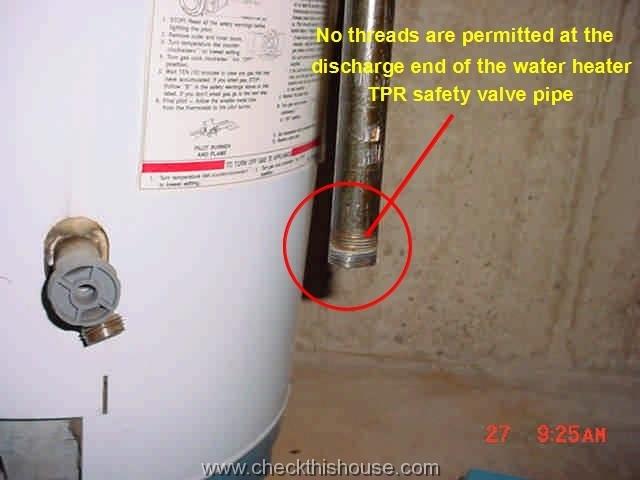 There should be no threads at the end of the water heater TPR valve discharge pipe, because when this valve starts leaking / dripping, and there’s a thread at the end of pipe… some of the home owners cap it, which creates a very dangerous situation. Whenever the safety valve will be required to open because of the increasing temperature / pressure, that capped discharge pipe might cause the water heater to blow up.
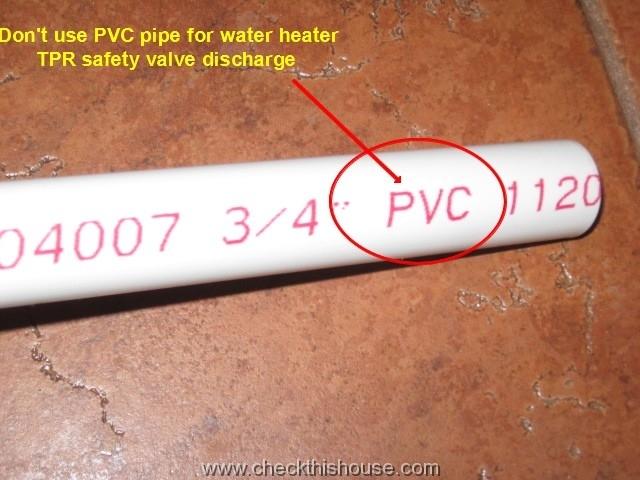 Water heater TPR valve discharge pipe must be made out of same materials that is used for water distribution – galvanized steel, hard-drawn copper or CPVC (regular PVC tubing would not withstand high temperature and it is not permitted). If you are planning to use anything else, make sure that it is approved in your jurisdiction.
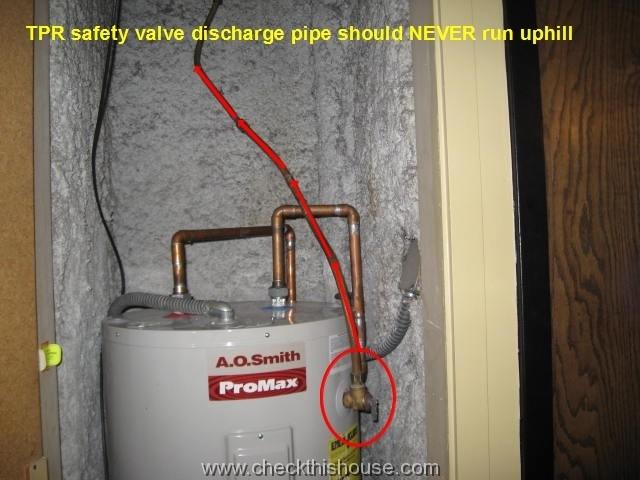 Discharge pipe from the water heater TPR valve must always run downhill- if the TPR valve opens occasionally, and water / steam instead of being drained, accumulates / floods the valve, it might eventually cause its corrosion, and prevent it from functioning properly or at all.
Water heater TPR valves should be tested periodically (as recommended by the manufacturer). There is a small lever on the top of the valve, which opens the valve when lifted.
BUT – most of the home owners never do it, and any type of valve tested for the first time after long period of time might not close anymore and will keep leaking. So before you make any testing attempts, first follow this short check list:
- Make sure that you know location of the cold water shutoff valve (main or dedicated for water heater), and that it is functional … just in case you have to use it
- Make sure that there’s a properly installed water heater TPR valve discharge pipe
- Make sure that discharging water will not damage your flooring material (you can place a bucket underneath and even cover the top with a towel to prevent hot water from over-spraying surrounding area)
- If it’s an old water heater, I wouldn’t even test the TPR valve, but it would make sense to replace – they are very cheap
Don’t forget your tank gas water heater maintenance, it’s a very important task!
Just one valve has so many requirements, Great example of what a good home inspector looks for. Just imagine whats is looked over in a electrical service panel. Good advise – Hire a professional.
This was great help. Most of the bad example photos were close to what I was planning to do (pipe into a sink). The little extra background about *why* something shouldn’t be done helps a lot.
Thank you Steve, I’m glad I was able to help. Good luck on your project!