



As with every fuel-burning appliance, proper venting is always critical, and to enjoy your solid (wood/coal) fuel-burning stove, you have to get it right.
This guide is just an explanation of basic safety / code requirements for the solid fuel burning stoves. However, you should always consult stove installation with your local building code enforcement division, owners / installation manual, and / or local Certified Chimney Sweep (www.csia.org)
Every solid fuel-burning stove must have a chimney. Sidewall venting or through the roof venting using the interior type stovepipe is not acceptable and extremely hazardous.
The most popular chimney types for the solid-fuel burning stove are masonry, and a UL approved Stainless Steel Class “A” Insulated Chimney.
Solid-fuel burning stove (and fireplace insert) connection to the existing masonry type chimney.
1. The chimney should be examined first to ensure that it is in a good shape, and lined for this particular application. Older chimneys often lack the liner and might be heavily deteriorated, or even blocked. In addition, there is usually a heavy creosote buildup involved with a wood/coal burning stoves, which will be very hard to remove from the brick chimney without the liner. The most common type of the liner used for a wood/coal burning stove would be a UL approved stainless steel system.
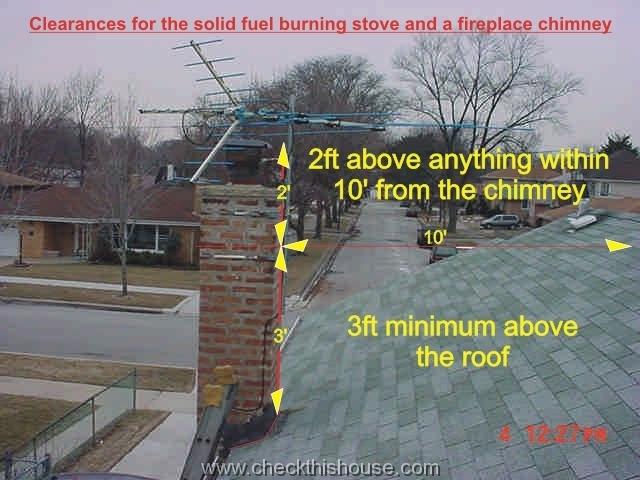 Masonry chimney installed on the house exterior wall is much harder to warm-up so it can provide proper draft. The liner (hopefully an insulated one) dramatically improves draft, and benefits discharge of the combustion products to the house exterior.
The minimum height of the wood/coal stove or the fireplace chimney (masonry or metal) would be 3’ above the roof surface and 2’ above anything within 10’ – of course, you can go higher, which usually improves draft.
2. If you have an existing liner in the masonry chimney:
- it has to be at least the size of the stove collar
- must be less or equal 2X of the stove collar diameter for the exterior chimney
- must be less or equal 3X of the stove collar diameter if the only exposed chimney section is above the roof
3. You cannot just stick the stovepipe into the existing chimney or into the brick fireplace firebox and expected it to vent properly. It has to extend into the chimney flue liner, should be sealed at the liner connection, and below the smoke chamber . Otherwise, gaps around the pipe will cause your house air to dilute combustion products inside the chimney, lower their temperature and compromise proper draft.
4. If you have a manufactured, metal type fireplace, and your idea is to connect a wood/coal burning stove to its chimney, contact the fireplace manufacturer.
5. Remember to keep the stovepipe at a ¼” per foot rise towards the chimney entrance. Maintain at least 18” clearance (for single wall pipe) between the stovepipe and combustible materials, and 6” for a double wall (double wall pipe has a stainless steel interior pipe and black exterior surface). If your chimney is behind the paneling (or any other combustible) wall, you’ll have to remove this combustible surface to provide required spacing. It is possible to reduce those clearances by using approved shielding materials / clearance-reduction system.
UL approved Stainless Steel Class “A” Insulated Chimney
There are basically two types of insulated chimney installations:
1. Typical for a single story house – stovepipe runs straight up from the wood/coal stove and terminates below the ceiling level where it connects with an insulated chimney. From here, the chimney continues through the attic and roof or just through the roof if you don’t have an attic.
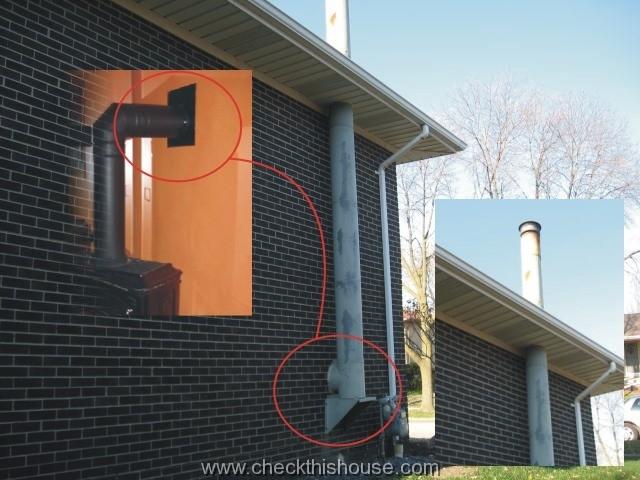 2. For any type of the house, especially if your stove is located close to the exterior wall – stove pipe runs from the appliance and terminates at the side wall (remember at least ¼” rise per foot towards the wall), where it connects with an insulated chimney. Special insulated connector passes through the house sidewall and angles up continuing to its required termination point. Do not use interior type stovepipe for the exterior and passing through the wall applications!
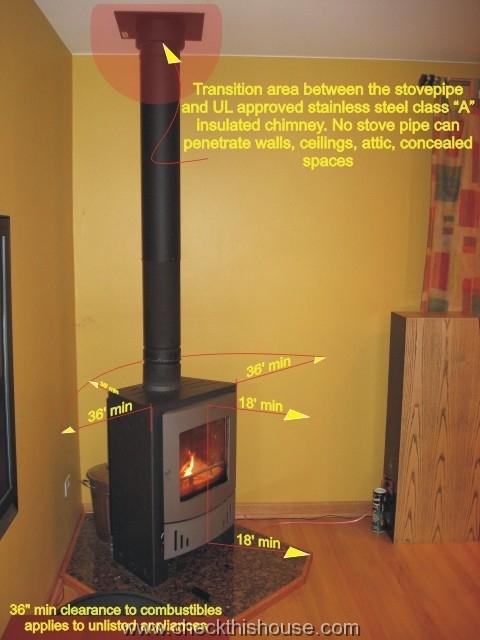 Minimum solid fuel (wood/coal) stove clearance to combustible material, unless otherwise listed and labeled by the manufacturer.
Always compare your appliance manual and local code with those minimums below. Your particular stove design might require different clearances. They may be also reduced if an approved type of clearance-reduction system is used.
- Front clearance of the solid fuel-burning stove – 18” min
- Sidewalls and rear clearance – 36” min
- Top of the stove clearance – 48” min
Bottom clearance for solid fuel burning stove:
- with legs >6” tall – 2” thick masonry base with a metal shield
- with legs providing 2”-6” clearance – 4” hollow masonry base + metal plate
- if less than 2” clearance – entire floor underneath the stove must not be combustible (no hardwood floor under the masonry base permitted)
Some other requirements for the solid fuel burning stove installations
- No garage installations
- Fuel storage minimum 36” from the stove
- No installation in an alcove or an enclosed space with a total area < than 512cu. feet
Comments are closed.