

Proper Attic Ventilation With Vent Chutes & Roof Soffit Vents
House attic vent chutes come in two popular flavors: cardboard and foam (looks like a compressed Styrofoam), and variety of colors.

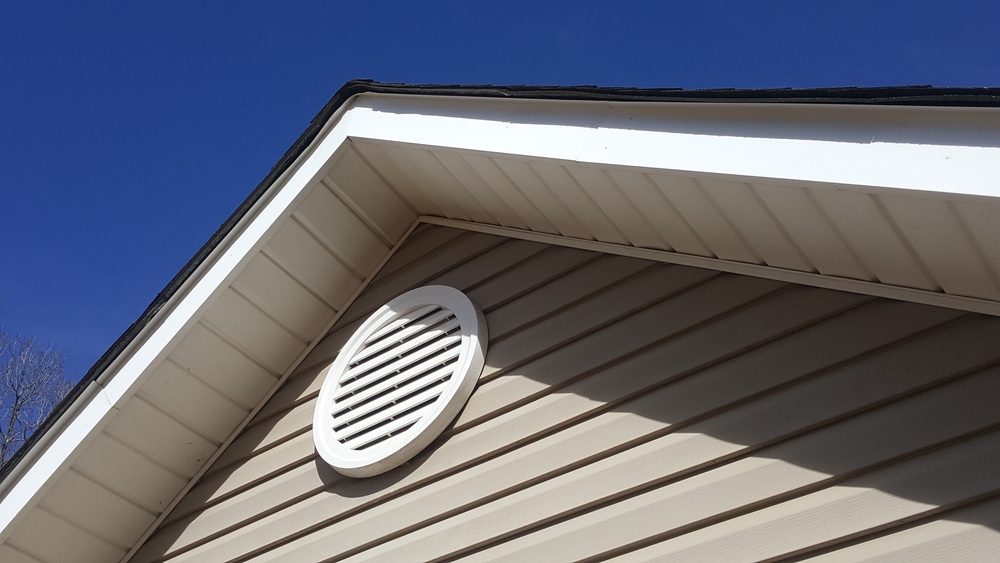
Vent chutes that are also called baffles or rafter vents play an important role in your attic ventilation system.
House attic vent chutes and their three important roles in attic ventilation:
- Vent chutes provide unobstructed air passage between the soffit vents and the attic
- Vent chutes allow installation of attic floor insulation close to the soffit, without worrying about clogging the soffit attic ventilation ports with insulation
- Vent chutes allow for sufficient accumulation of insulation right above where your house ceiling meets the exterior wall, thus limiting air exchange between the living space and the attic
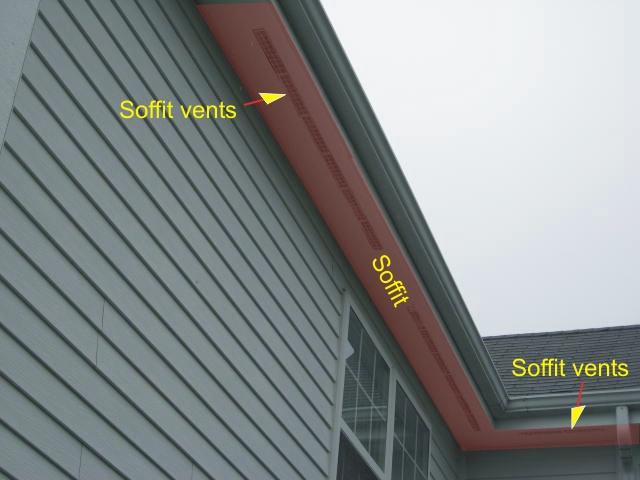
However, your attic ventilation / air circulation can perfectly survive without the vent chutes, in some cases they might be even useless (houses with no soffits or no soffit vents don’t have any use for vent chutes) – it all depends on the design of attic ventilation and insulation of the attic floor.
Soffit – the exposed underside of the roof section overhanging house wall
So, how do you find out if your attic ventilation is properly functioning and if you need any attic vent chutes?
Unfortunately, you have to have attic ventilation examined (not that this is the only reason to visit your attic periodically). If your climate has a cold season; pick one of the coldest days for this purpose, best if the temperature drops below freezing.
This way, you’ll be able to spot many more attic ventilation problems than while doing it on a warm day. For attic ventilation issues other than vent chutes, please visit the rest of the house attic problems category posts.
House attic vent chutes come in two popular flavors:
- cardboard
- foam (looks like a compressed Styrofoam), and variety of colors.
Most typical attic vent chute sizes are 16″ and 24″ to match open space between the roof framing members.
Vent chutes are shaped in such way that can be stapled to the roof decking along its edges, which is an easy task if installed on a new construction, without the ceiling drywall below.
Attic vent chutes can be also installed by sliding them between the insulation and the roof decking, which might be hard in some cases because of the roofing nails sticking out of the decking, low clearance, and insulation of course.
- Attic vent chutes are very useful for attic ventilation improvement in attics filled with a blown-in type insulation.
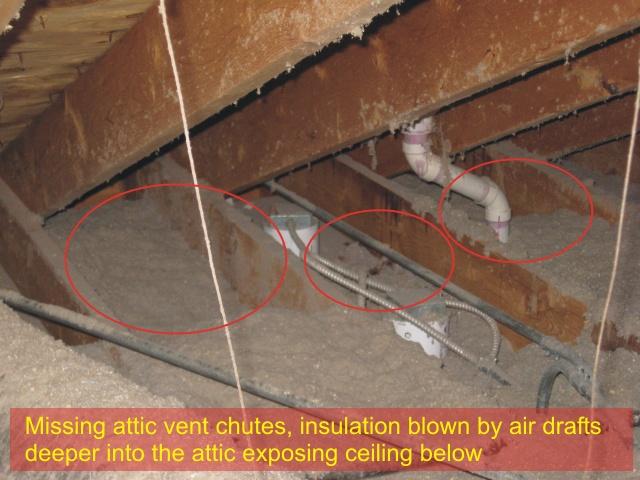
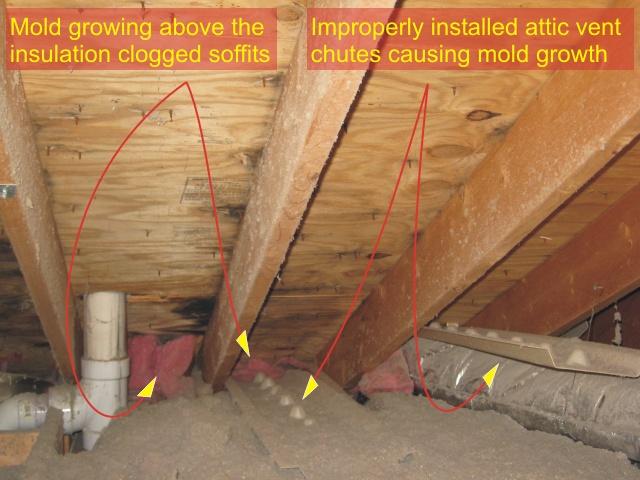
Blown-in or any loose / poured type of the attic floor insulation isn’t as easy to control as blankets and other compacted / formed into a shape insulation types.
Without vent chutes, the insulation can fall into the soffit compromising attic ventilation, or it is often blown by air drafts from the area near the soffit deeper into the attic. This exposes attic floor and allows warm air from the living area below to migrate into the attic and condensate on the roof decking surface (cold season).
To maintain attic ventilation and prevent such situation from happening short pieces of batt insulation can be placed in the area closest to the soffit, and then filling up the rest of the floor cavity with blown-in type insulation, or by installing vent chutes.
With already installed blanket, batt, rolled type of attic insulation stuffed to far into the soffit you’d need to pull it back into the attic so you have enough room between the roof decking and the insulation for sliding the vent chute into that space.
- Don’t push the vent chute all the way down into the soffit, this is not necessary, it just has to go slightly deeper than the insulation directly beneath it. After placing the vent chute against the roof decking (staple it if you can), push the pulled insulation firmly back into the space, but without crushing the vent chute.
Attic ventilation – vent chutes in cathedral ceilings
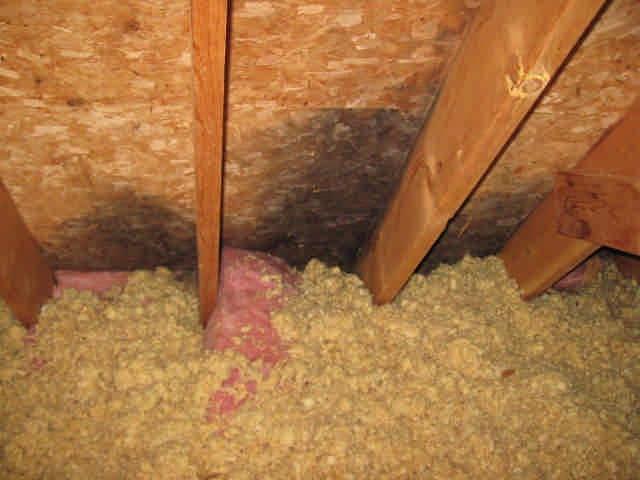
This attic ventilation subject I’ve already covered in the cathedral ceiling ventilation article. If there are no vent chutes installed and the insulation has been packed tightly into the rafter space, you’ll most likely end up with mold, and not much can be done without serious remodeling.
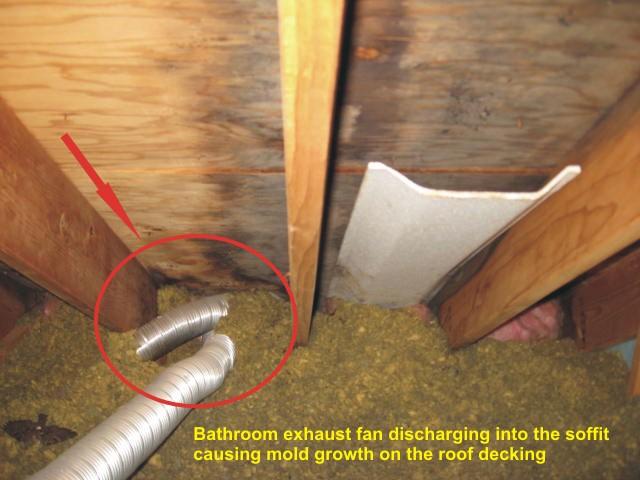
In some cases installed vent chutes might create attic ventilation problems – a very common issue is when the bathroom vent discharges into the soffit (International Building Code does not allow it, but some jurisdictions do … for some unexplained reason).
With the attic vent chute installed close to the bathroom vent discharge register, the warm and humid air will always find its way back into the attic and often result in condensation + mold growth.
How many attic vent chutes / rafter baffles do you need to optimize attic ventilation?
If you go to your attic to evaluate attic ventilation and against all odds everything looks perfect:
- there’s no moisture stains on roof decking and framing
- no corrosion or roofing nails sticking through the decking
- no dripping condensation stains on the attic floor insulation
- no mold residue
you most likely don’t need any vent chutes.
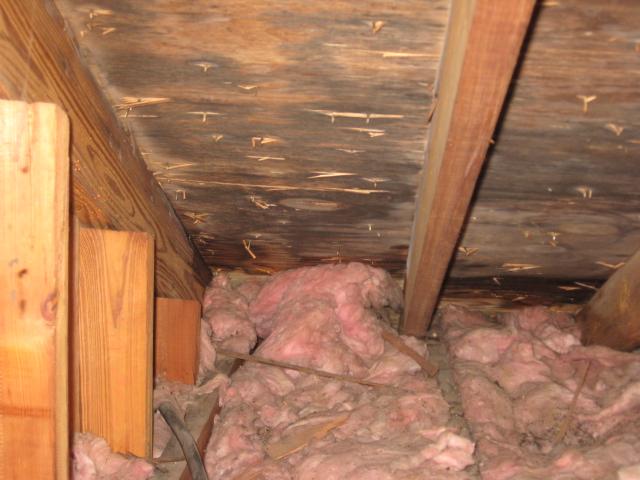
If you did notice any of the problems listed above, you’d have to start investigating attic ventilation, and attic vent chutes installation might be a way to solve your problems.
You can start from installing them only in the areas where you observed some obvious ventilation issues.
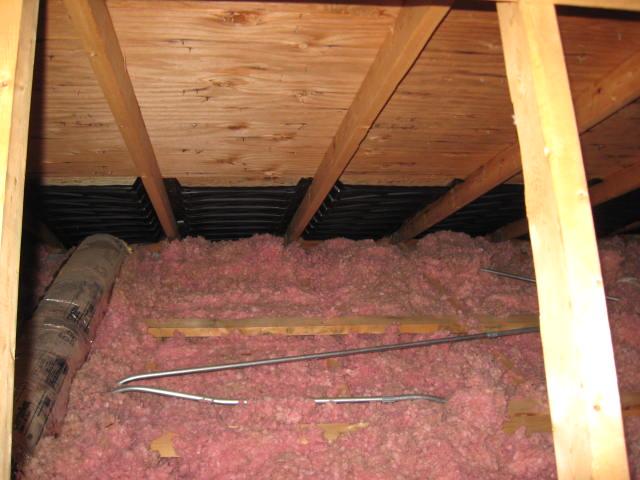
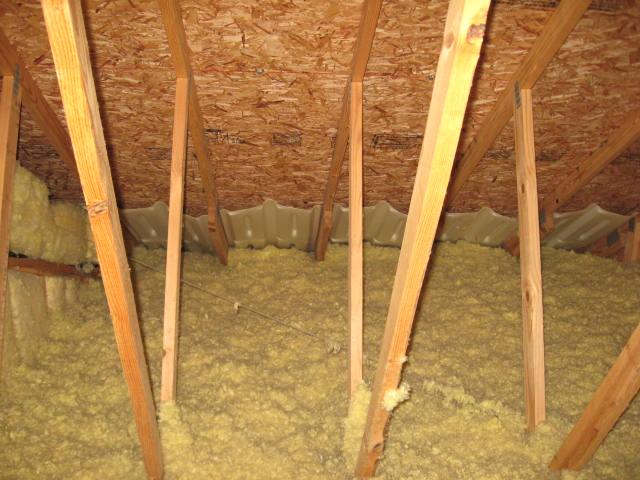
You can also fill every single rafter / truss space with a vent chute just to be on a safe side, but before you do that, make sure that your house has a soffit with existing and open vents.
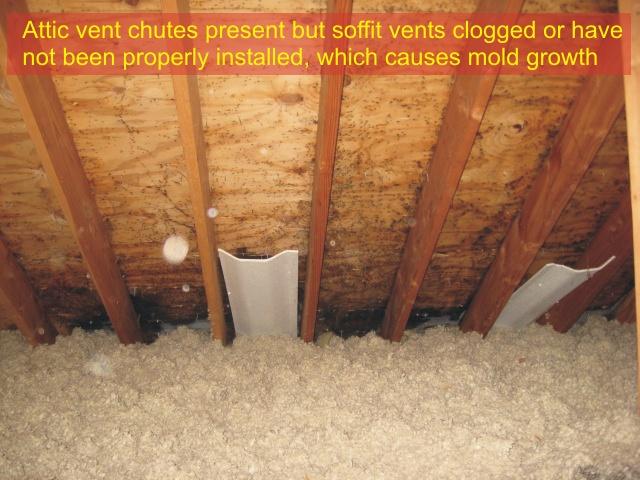
No matter how many vent chutes you’ll install in an attempt to improve attic ventilation, they won’t work if the soffit vents are clogged or if they don’t exist at all – seeing a soffit vent register on the house exterior does not necessarily mean that it is open.
It might be sealed with several coats of paint, clogged with dust / lint, clogged with insulation from attic, or there might be no cut-out above the exterior register – check this first.
Whatever you decide to do, always remember about your safety first!
Do not attempt to do anything you are not felling 100% comfortable with, be extremely cautious on the ladder, always wear protective gear when working in your attic, avoid performing attic ventilation and vent chutes work in hot weather.
Comments are closed.