
• Make Your Home Energy and Cost Efficient - FREE 37 Pages of Tips / instant download / no registration
  • Home
  • About Me
  • Disclaimer
  • Virtual Help
  • Partners
    • Home Related
    • For your Home
    • Construction / Remodeling
    • Real Estate
    • Home Inspections
    • Internet Marketing
    • Home and Garden
    • Heating and AC
  • Contact
  • Q&A How to Ask
  • Advertising

Home Maintenance, Remodeling and Repairs

Home maintenance advice, home repairs, remodeling projects for home owners, buyers, from your Illinois home inspector

  • Attic
  • Electric
    • Electrical System Issues
    • GFCI / AFCI
  • Environmental
  • Exterior
    • Free Shed Plan
    • Grading / Drainage
    • House Roof
  • Foundations
    • Crawlspace
  • Garage
    • Car Garage Issues
  • House Maintenance
    • Fall Maintenance
  • HVAC
    • Air Conditioning System
    • Chimney Problems
    • Heating System
    • House Ventilation
  • Inspections
    • Chicago Condo Inspection
    • Crawlspace Inspection
  • Interior
    • Bathrooms
    • House Components Issues
    • Kitchens
  • Plumbing
    • Gas Water Heater
    • Plumbing Problems
  • Recalls
  • Safety
    • Carbon Monoxide
    • Handrails and Guardrails
    • Smoke Detectors
www.checkthishouse.com
You are here: Home / Plumbing / Cast Iron Drain Pipes Problems

Cast Iron Drain Pipes Problems

  Written by Dariusz Rudnicki     Print This Post   Leave a Comment


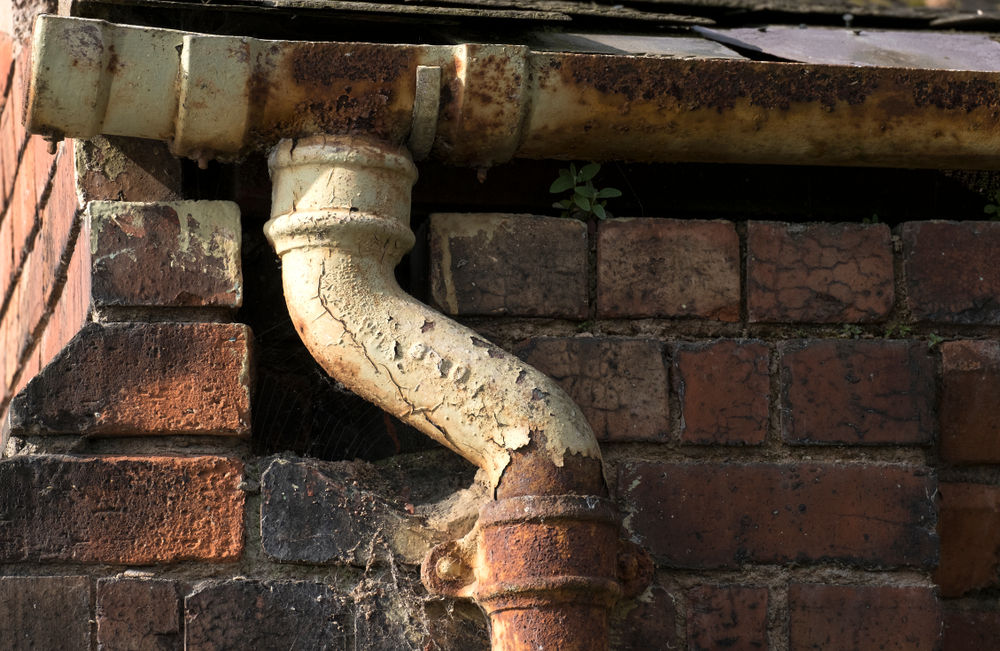
If you are living in an older house, its plumbing might contain cast iron drain lines. Compared to the newer PVC pipes, cast iron drains are much quieter during operation; but at the same time they might prove to have significant, and quite expensive, problems.

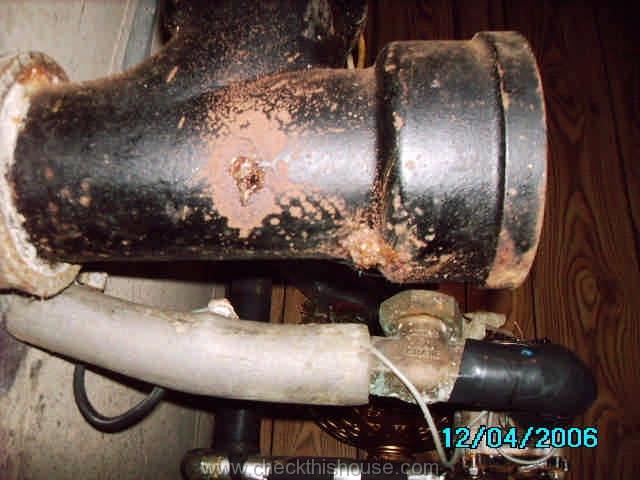
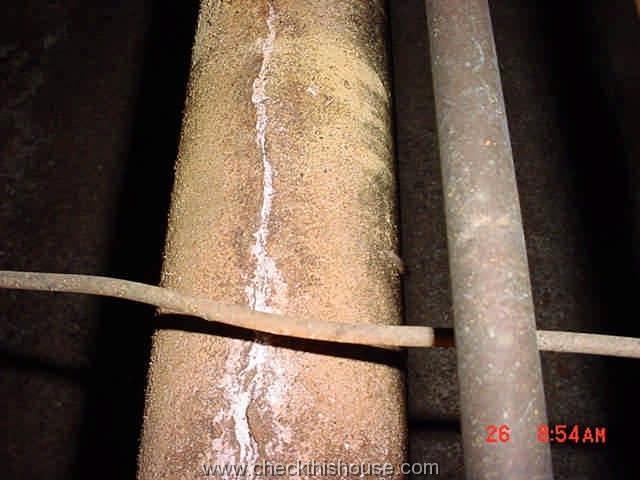
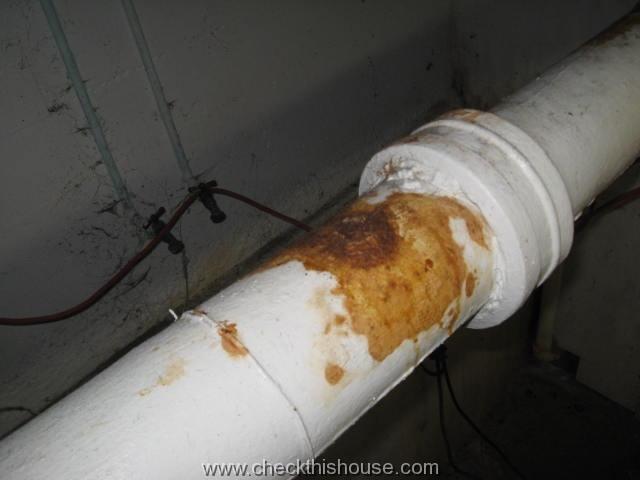
Some of a cast iron pipes have a tendency to corrode and crack over time, and this process often starts in places we have little or no access to. It is a defect caused by inadequate annealing – heat treatment of the cast iron pipe during the manufacturing process (repeated heating and cooling). It makes the pipe more vulnerable to corrosion and sometimes causes it to crack.

If all of your pipes are exposed, you can easily check them for rust-colored blisters on their body and cracks, which usually appear along the top part of the pipe.
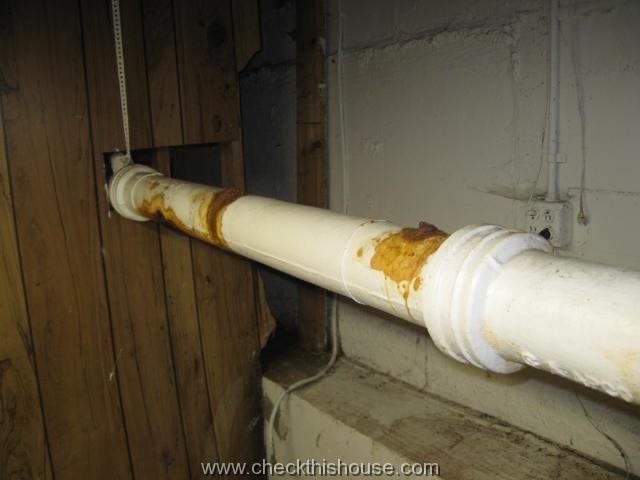
You’re out of luck if your cast iron drain pipes run behind the finished walls and all you’re experiencing is an unpleasant sewer odor in the house. If you’ve eliminated all other possibilities for its source (one of them might be a plumbing drain vent problem discussed in other post), and you do have a cast iron drain installed – it might be cracked.

Cast iron drain lines are expensive to repair; the material and labor rates are significantly higher that the ones for PVC piping, but some jurisdictions may simply not allow to use anything but cast iron.
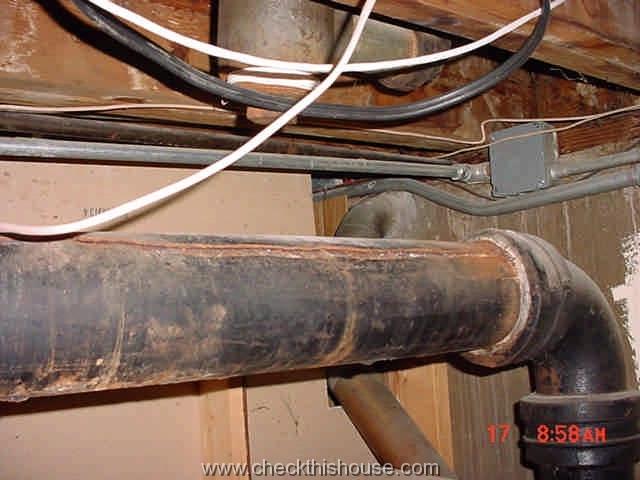
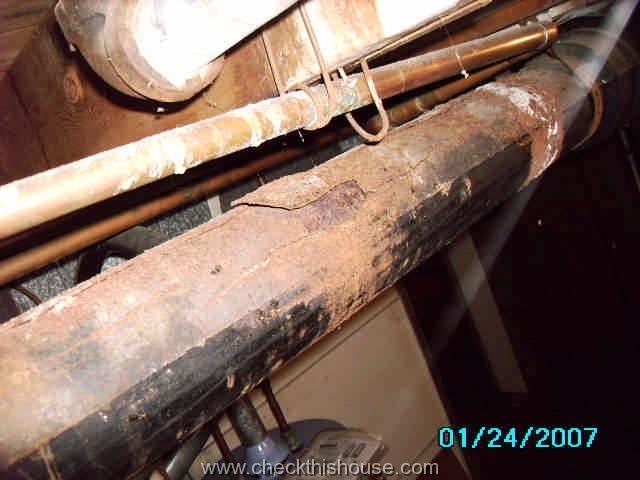
Assuming that you can replace your damaged cast iron drain line with a PVC section, it’s just the matter of a few simple steps. But, before you start the procedure, make sure that you have a good support under the entire cast iron pipe you’ll be working on. When you remove the damaged section, the remaining end parts may become unsupported – and cast iron pipes are very heavy! Proper support is extremely important when dealing with vertical cast iron pipes – if it runs inside the wall, theoretically it should be secured with clamps and other pipes, but spending a little extra time supporting it can save you from unnecessary pain.

  • remove an old pipe section (you can use a snap cutter or a mechanical saw / Sawzall® Reciprocating Saw with a long blade – this will be the toughest part of this procedure)
  • cut a slightly shorter section of a PVC pipe (1” shorter than the section you’ve just removed should be enough)
  • clean the pipe surface and install two so-called “transitional fittings” (it’s just a thick rubber tube with a screw clamps installed on each end) on each end of the cast iron pipe – you have to slide them or roll them back onto the cast iron pipe in order to put the new PVC section in place
  • slide or roll the rubber tubing back onto the PVC pipe and retighten the clamps screws with a screwdriver

This is it (at least for a straight piece)! However, if you have to install cast iron, you’ll most likely need a plumber $$$

More from Home Maintenance

  • House Electrical Panel and the Most Common Mistakes you Make — Home Maintenance, Remodeling and Repairs
  • House Crawlspace Inspection – Termites and More — Home Maintenance, Remodeling and Repairs
  • GFCI Maintenance | Ground Fault Circuit Interrupter Testing — Home Maintenance, Remodeling and Repairs

Home Maintenance Recommends

  • Composters And The Home  (DIY Home Tips)
Blog Margeting Related Posts Plugin For Home MaintenanceAsk Home Maintenance To Recommend Your Posts Blog Marketing Related Posts Plugin Counter

  • delicious Bookmark on Delicious
  • digg Digg this post
  • facebook Recommend on Facebook
  • linkedin Share on Linkedin
  • reddit share via Reddit
  • stumble Share with Stumblers
  • technorati Share on technorati
  • twitter Tweet about it
  • yahoo_buzz Buzz it up
  • rss Subscribe to the comments on this post
  • email Tell a friend
Filed Under: Plumbing Tagged With: cast iron pipe, cast iron pipe crack, cast iron plumbing, cracked cast iron pipe, cracked iron drain pipe repair, drain lines, heat treating ductile iron pipe, how to plumbing, location of cast iron drains, plumbing diy, repair cast iron pipe cracks, replace cast iron trap, sewer pipe
About Dariusz Rudnicki

I'm a retired Illinois home inspector, founder and editor of checkthishouse.com, a blog which attracts around 2 thousand readers daily and is dedicated to answering the many questions of home owners and home buyers.
Connect with me on Google+

Comment / Ask me a Question Cancel reply

You must be logged in to post a comment.

Sponsored Ads

  • www.checkthishouse.com

***Go to Home Maintenance Q&A section***

Sponsored Ads

.

Home Safety Maintenance

House Maintenance Advice - Vocal Smoke Detector

Smoke Detector Safety Tips – is Your Life Worth at Least $10.00?

Second floor laundry chute mounted on the floor surface with a 9' drop underneath

Laundry Chute Hazard – a Convenient Way to a … Disaster

kidde carbon monoxide

Carbon Monoxide – Toxic Gas Without Taste, Smell or Color

The clothes dryer plastic vent is forbiden, any type of dryer vent should be as short as possible

Clothes Dryer Vent | Why is Dryer Vent Cleaning so Important

Perfect size and one of perfect shapes for the stairs handrail

Stair Handrails and Guardrails Safety Issues

Closet light safety - exposed incandescent light bulb is not permitted, too close to storage, poses fire hazard

Closet Fire | Closet Light Fixture Fire Hazards

Garbage disposal electrical wiring performed with a lamp cord, exposed bare wires, missing connection box cover

Garbage Disposal Wiring | Kitchen Disposal Safety

telesteps-telescopic-combiladder-fully-open

Telescopic Ladders Review – Watch Your Fingers!

Kitchen stove safety - single piece stove anti-tip bracket

Kitchen Stove Safety Anti Tip Bracket

House safety maintenance - climbable balcony guardrails are not permitted - watch your children

Balcony Railing Safety Code | Balcony Guardrails Safe for Children

***Go to Home Maintenance Q&A section***

Like us on Facebook

Search CheckThisHouse.com

Helpful links

  • A UTC Fire & Security Company
  • CDC
  • Consumer Search
  • CPSC
  • Energy Star
  • EPA – Environmental Protection Agency
  • Federal Pacific Electrical Panels
  • Going Green Basics
  • HVI – Home Ventilation Institute
  • IEMA
  • Mesothelioma Center
  • Nicor Gas
  • Peoples & North Shore Gas
  • Permit Place
  • Underwriters Laboratories
  • USFA
  • Zinsco Sylvania Electrical Panels
www.checkthishouse.com

Sponsored Ads

  • If you can see this link so can 1000's of other eyeballs every single day; advertise on checkthishouse.com

Home Maintenance Alexa Stats

Recommend

Recommend [HomeMaintenance]

Home & Garden Blogs
bloglog
Connect with me on Google+

Last 7-days Popular Posts

  • House Water Heater Vent Pipe, How To Do It Right 2443 view(s)
  • Chimney Flue and Furnace / Water Heater Venting 1469 view(s)
  • Getting Rid of Mold in Your Attic| Killing Mold in Attic 636 view(s)
  • Attic Black Mold and Why is it Growing in Your Attic 594 view(s)
  • Code Requirement for Bathroom Vent Location | Bathroom Exhaust 579 view(s)
  • Where to Install Smoke Alarm Detector | Proper Smoke Alarm Location 557 view(s)
  • Attic Ventilation | How Many Attic Vents Your Roof Needs 524 view(s)
  • Plumbing Vent Problems in Your House | Sewer and Drain 509 view(s)
  • Saddle Valve Installation 491 view(s)
  • Carbon Monoxide Detector Alarm Locations | Where to Install CO Detector 437 view(s)

Last searched terms

  • - mold in my attic
  • - roofing cement to seal furnace flue
  • - attic mold removal
  • - how much ventilat(...)style attic need
  • - plumbing vents
  • - electrical box mistakes
  • - where to locate s(...)tors residential
  • - how to get rid of(...)eating air ducts
  • - standard height for railing on balcony
  • - how to install soffit vent chutes

Visitors Currently Online

  • 01 visitor(s) online
  • powered by WassUp

Search CheckThisHouse.com

Return to top of page

Copyright © 2012 · Home Maintenance · Chicago Web Hosting · All Rights Reserved

  • follow:follow:
  • Become my Facebook friend Become my Facebook friend
  • Connect with me Connect with me
  • RSS RSS
  • Tweet with me Tweet with me
  • Subscribe to my YouTube Channel Subscribe to my YouTube Channel