



House crawlspace is one of those critical areas, which can either make our lives better or more miserable. The tendency for home owners is to completely forget about it so long as the home inspector doesn’t bring the subject to the surface.
It is ugly, dirty, often wet, sometimes flooded, and most of the time – full of surprises.
In several of my posts, I’ve emphasized the importance of exploring this area, especially when preparing your house for sale. Any accessible crawlspace will most likely be evaluated by a home inspector, and taking care of some of the possible issues before they are delivered in the inspection report, could make the difference between selling the house … or not.
So, what can go wrong? Depending on your house design, you might have all, some, or none of the following:
1. Cracked foundation / possible structural problems
2. Leaking foundation
3. Drainage problems / flooding crawlspace
4. Plumbing components issues – leaking water supply lines, drain pipes, crawlspace water heater installation problems
5. Heating system issues
6. Electrical components issues
7. Floor framing and structure support issues
8. Structural pest infestation – those are Termites, Powder Post Beetle, and Carpenter Ants
9. Mold problems
10. Crawlspace ventilation and insulation
… there may be more problems in the crawlspace, but those are my Top Ten winners. So let’s take a trip under the floor and let me show you what to look for … don’t forget a flashlight!
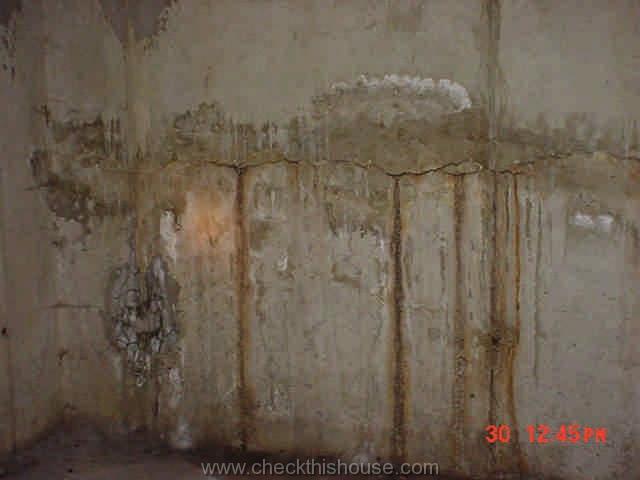
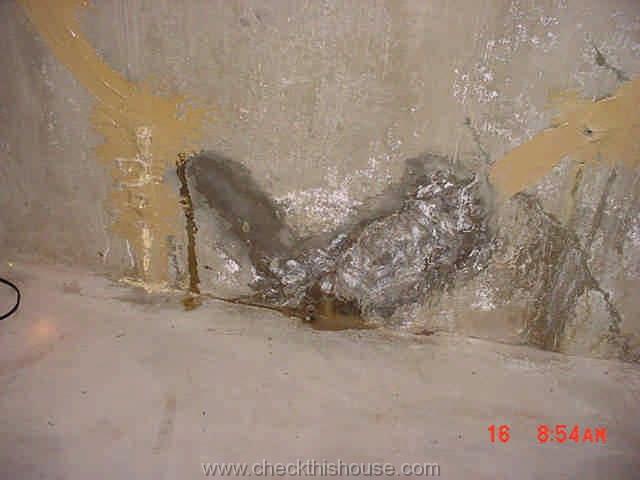
 1. Cracked foundation / possible structural problems – Generally speaking, cracks that are less than 1/4″ open are not commonly regarded as being structurally significant. However, if you’re noticing displacement on both sides of the crack, significant separation, distortion, uneven sagging / sinking of the foundation section (usually accompanied by sloping / uneven floors), buckling, horizontal cracks – get a foundation specialist / structural engineer to get a professional assessment. Some of those problems may not be noticeable on the exterior for a long time, and a good example would be horizontal crack. This is just one of the reasons to visit your crawlspace periodically.

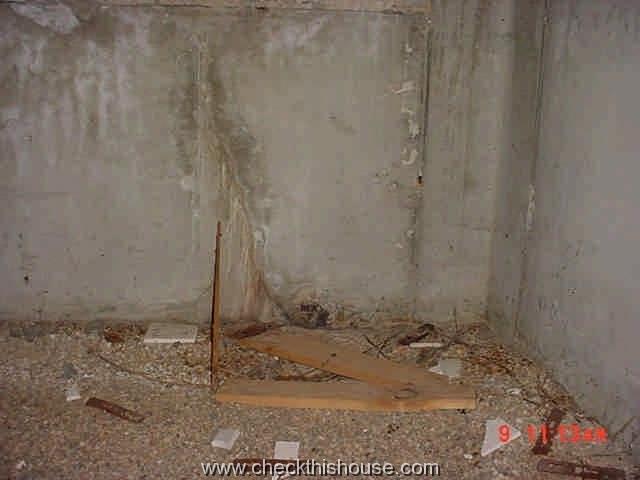
 2. Leaking foundation – there may be small and large cracks that won’t cause any seepage because the drainage system and grading (positive / away from the house sloping of soil and hard surfaces) around the house have been properly designed. However, if the area surrounding your property has a negative slope, the rain water will be directed towards the foundation, and there’s a big chance that the cracks will leak. Another factor increasing chances of your foundation cracks leakage is a so called “water table” – it’s the top level (surface) of ground waters, which may be sometimes higher than the floor of your crawlspace. In such cases, the water pressure will force water through the foundation cracks. The solution is rather simple; it would require the resealing of leaking cracks. The most popular method involves injecting an epoxy mix into the holes predrilled along the crack opening. The two most popular companies in Illinois are Perma Seal and US Waterproofing (I have no affiliation with them at all, though), and what you get is usually a 10 year to lifetime transferable warranty on performed repairs – that’s an important asset when you’re selling your property. Your other option is to dig on the exterior (or have somebody do it for you), all the way to the base of foundation, clean the surface and seal it.
More in Crawlspace Inspection, Part Two – Drainage and Flooding.
Hey, why would I remove something that provides good information, and we all need to advertise to educate, otherwise nobody will hear us speaking 🙂 … Crawlspace inspection posts are for those home owners who decide to evaluate those areas themselves. I’m trying to give them just some basic information about the problems they might encounter, and deeper “how to” and “what to do” will be covered in different category (soon). But thank you for pointing out some things (I might need to re-wright a sentence or two to make it more specific), and for those positive comments about my website.
My post was in response to this specific statement:
“Your other option is to dig on the exterior (or have somebody do it for you), all the way to the base of foundation, clean the surface and seal it.”
It seems to me that relieving the hydrostatic pressure that might be causing or worsening wall cracks and seepage is a always a good idea and if it can be done without digging out foundation walls, even better. Anyway, I might have misunderstood that statement.
My job is to educate, not to advertise. Feel free to eliminate that post if you feel it is going to confuse your readers.
As for the Bright Wall Panel I will wait for the post to address your concerns, so that I don’t make the same mistake of going off topic twice. But I am really interested in what you have to say and on your observations. We are consistently upgrading and working to develop the best products and we value the feedback from home inspectors, who are in the field just as much as we are.
Compliments on the blog and the site. You’ve got some great information compiled here.
Hi Cynthia, this post wasn’t exactly about what you’re advertising here … it is about leaking cracks and not about waterproofing of the entire foundation. Anyway, another post about what your company is doing is coming soon and one of the systems you’re promoting is not actually something that I would recommend. I’m talking about the Bright Wall paneling – I’ve seen what is happening behind that sheet of plastic, and it is BAD. What it doe’s, besides diverting water into the sump pump, it traps all the moisture penetrating foundation and creates perfect environment for a mold growth, lots of it!. Just my two cents …
There in another option to fix leaky basements that will not involve digging out the foundations. It consists in installing an interior perimeter drainage system along the foundation walls.
This system will intercept any water and moisture seeping through the walls and the joint between walls and slab and divert it to a sump pump systems.
This can be installed without disruptive excavations, in only a few days, and has the advantage of relieving hydrostatic pressure against the foundation walls.
This website discuss and compares the different approaches used in dealing with leaky foundations
http://www.basementsystems.com/learning_center/basement/