

Refrigerant Line Insulation, How to Properly Insulate Refrigerant Lines & AC Foam Lines
Older refrigerant lines might be wrapped with insulating tape in order to prevent condensation from forming on pipe surface during system operation.

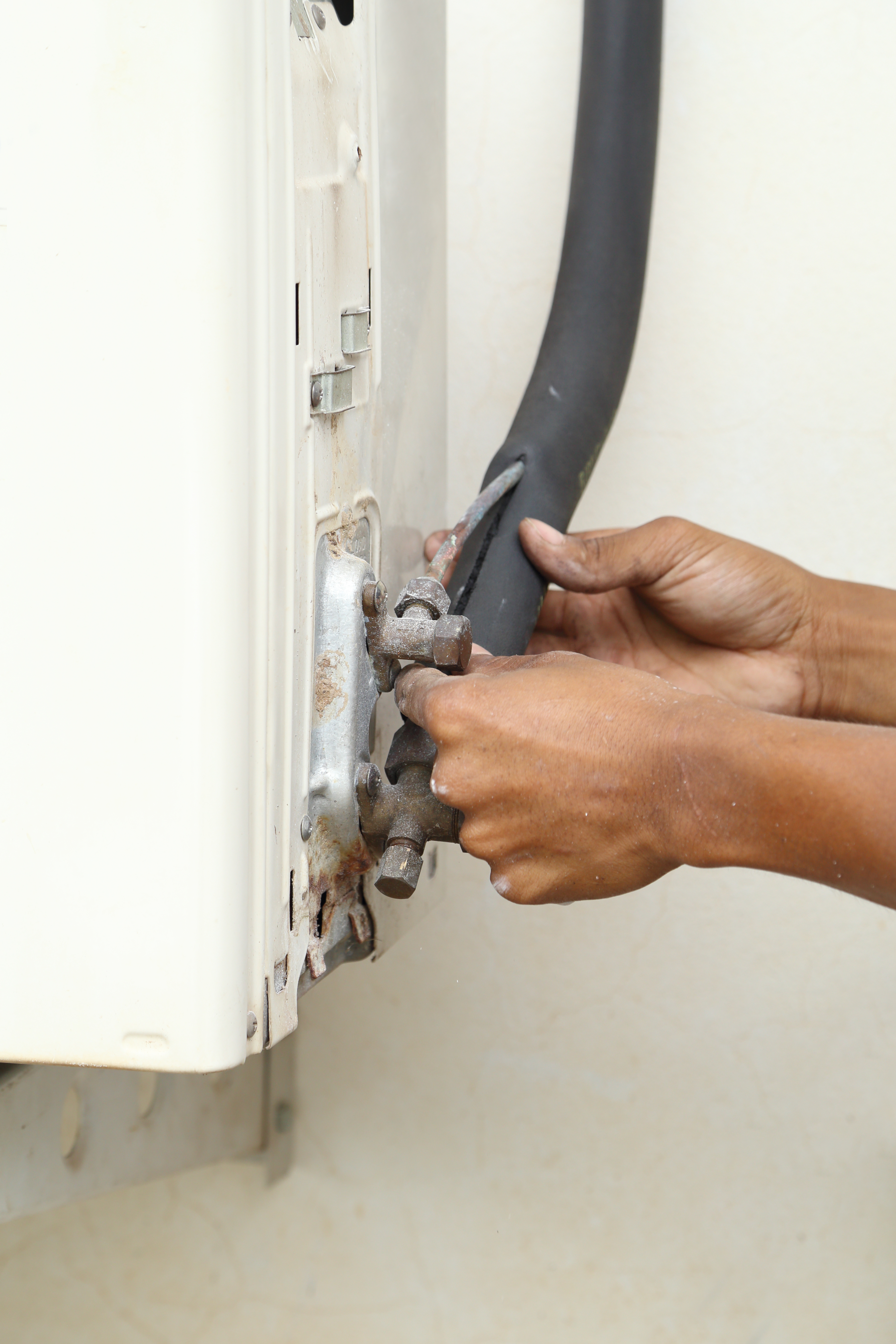
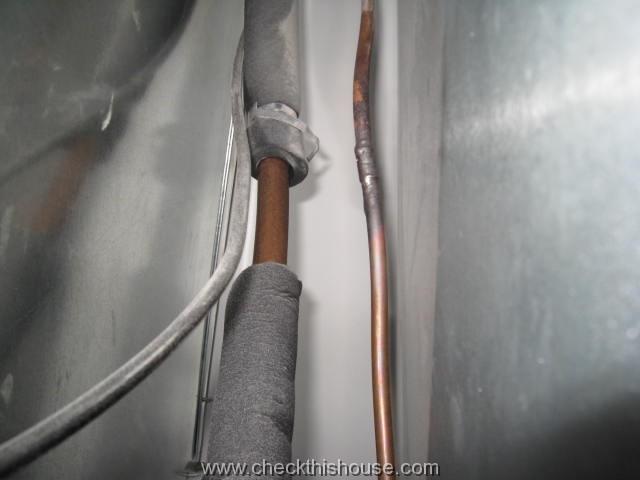
Refrigerant line insulation is partially responsible for the efficiency of your air conditioning system operation.
Two different diameter copper refrigerant lines (one approximately 1/4″, second 3/4″ – diameter depends on your system size and distances), run between the air conditioning system condensing unit (house exterior), and the AC coil (“A” coil – named after its shape) installed inside the house (sometimes crawlspace or attic) / contained within its own compartment.
Suction refrigerant line
This is a thicker copper pipe, carries cool refrigerant gas and has a temperature of approximately 40°F (4.4°C) / requires insulation.
Liquid refrigerant line
Thinner copper pipe carries liquefied refrigerant, its temperature is approximately 110°F (43.3°C) / does not require insulation but in some installations insulating liquid refrigerant line is recommended. A good example would be when running liquid refrigerant line through the attic area where temperature often exceed 110°F. Un-insulated refrigerant line will lower your air conditioning system’s efficiency.
In most cases the coil compartment is attached to the forced air furnace, but sometimes you’ll just have an air handler (some properties use hot water or steam heating systems, and separate forced air, central AC).
An entire length of the thicker / larger diameter copper refrigerant line (suction) should be insulated with vapor proof foam type of insulation (usually black or gray sleeve).
Older refrigerant lines might be wrapped with insulating tape in order to prevent condensation from forming on pipe surface during system operation. This is critical during hot, humid days, and lack of the refrigerant lines insulation often results in condensation forming up on their surface, and dripping onto the surrounding surfaces.
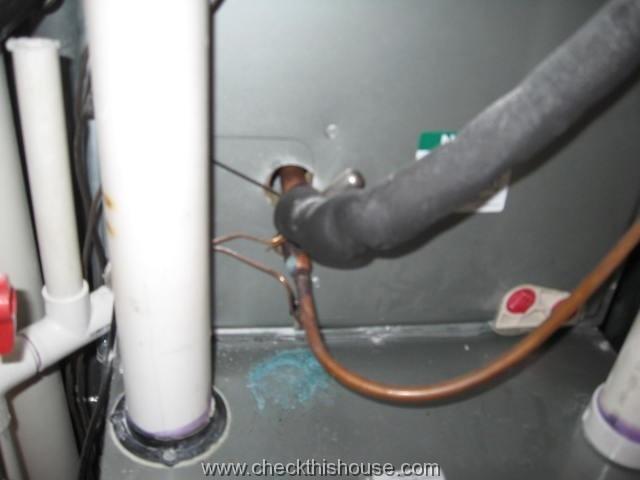
Condensation on the refrigerant lines exterior sections is usually harmless if the unit sits on the ground, but the system will have to work harder, and waste energy to compensate for lack of the insulation.
Refrigerant lines insulation should be also installed properly at furnace plenum (ductwork inside the house) penetration, to prevent condensation / water from dripping onto the furnace enclosure and heat exchanger.
Lack of, or improperly installed refrigerant lines insulation might be responsible for corrosion, discoloration, could compromise internal components of the air conditioning / heating system, and significantly shorten its life span.
Lack of suction refrigerant line insulation on pipes running inside the wall / ceiling cavities, or through the attic will result in heavy condensation, could cause damage to your interior finishes and expensive repairs.

Comments are closed.